
Publishing Just Made the Case for Being Human
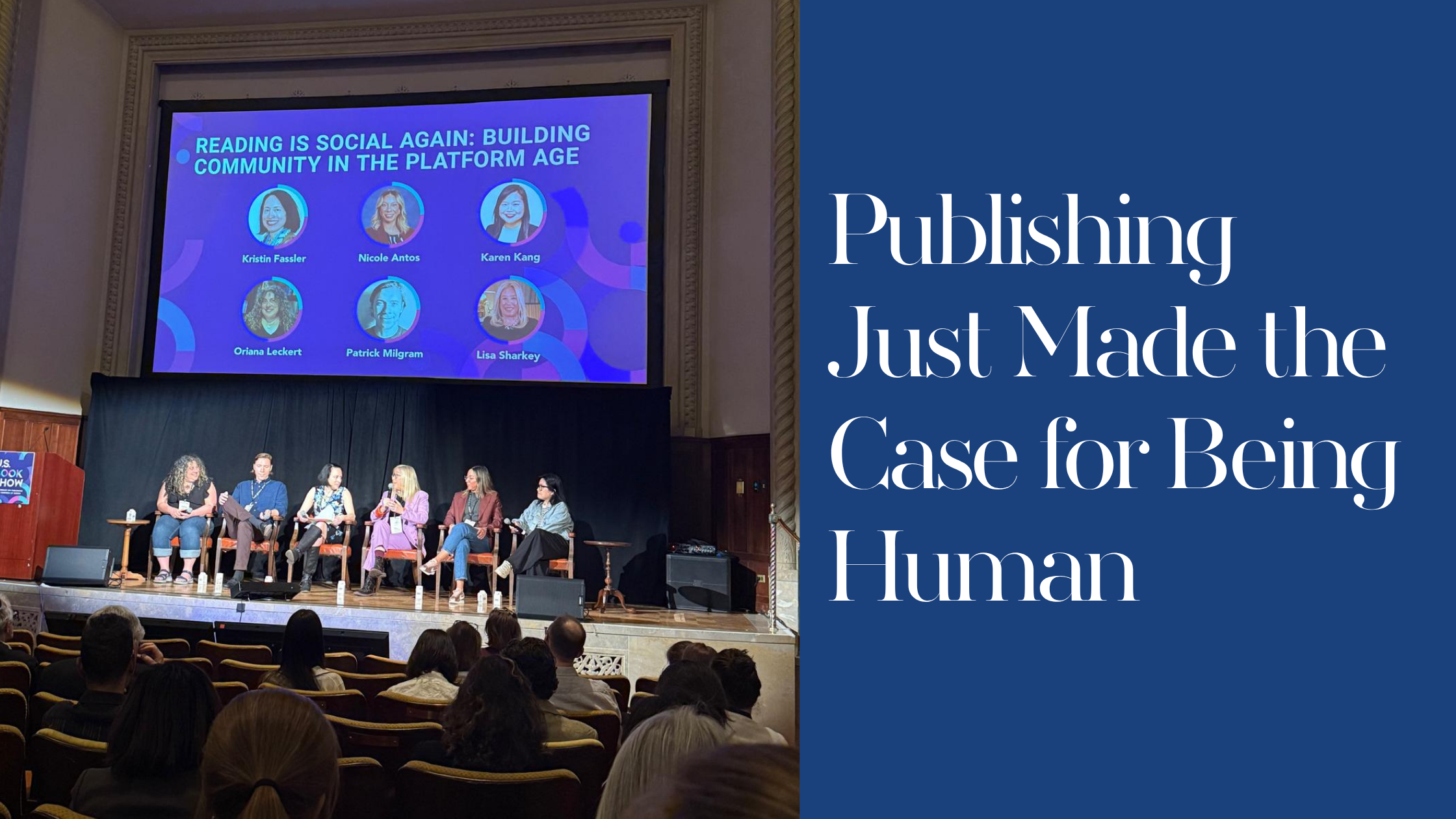
Earlier this June, Publishers Weekly gathered 700 publishing professionals in NYC for the US Book, two days on the future of books. AI came up in nearly every session. And yet every panel — agents, community, podcasts, even the one about AI search — kept arriving at the same conclusion.
The human relationship is the asset.
Here's what that looked like, room by room:
1. Discoverability has gone relational
The "Reading Is Social Again" panel made the case with numbers: half of paid Substack subscriptions come from within Substack — readers finding writers through other readers. The advice that followed was refreshingly unfancy. Don't discount small accounts (we trust them — there's an intimacy there). The comment section is "gold." And Kristin Fassler of Penguin Random House put it plainest: pick one platform and commit, rather than sprinkling yourself thin across five.
And the podcast panel were in full agreement on the relationship strategy: most guest lists get stacked from the host's own network. Your warmest path onto a show is a person, not a pitch.
2. Niche is large
Overgeneralization is over — that came through in session after session. So did a few other funerals, courtesy of the panelists: blasting out your ARC list is over (Karen Kang of TikTok made the case for hyper-personalizing every reader and influencer outreach), and — per HarperCollins' Lisa Sharkey, happily — saying "people aren't reading" is over too. Substack's Patrick Milgram had the receipt: five million paid subscribers say readers want to go deeper, not away.
The examples Lisa Sharkey shared made it concrete: a Facebook community built around "When Women Ran Fifth Avenue" that drove 4,000 preorders. A thriving book-and-podcast community for ADHD women. Facebook groups and other engaged communities, dismissed for years, quietly working — private, safe, and full of people over 50 who actually buy books.
Small, specific, and engaged beats big and vague. Every time.
Where does your audience already trust you — and are you spending your energy there, or chasing a platform you don't even enjoy?
3. Taste is the job AI can't take
The literary agents panel got philosophical. AI has no judgment — left alone, it drifts toward narrower and narrower outputs. Agents earn their keep on taste, relationships, and the ability to say "this one." The CEOs on the keynote stage drew the same line: AI belongs in operations and workflow, and has no business in the creative and curatorial heart of publishing.
My favorite line of the whole conference: the antidote to the algorithm is art.
4. Your website still needs to speak machine
And yet — the session on AI search, led by Cam Lennon of ZON Publishing, was a wake-up call for many. An AI query is a brief, not a search. Something like 40% of discovery is headed toward AI engines, and Cam's advice was to treat your website like a surface AI can actually read: semantic, intentional, explanatory.
Being human wins the relationship. Being clear wins the referral. You need both.
So what do you do with this?
One panel offered a reframe that I thought was very powerful: making the moment (the planned launch) versus meeting the moment (being ready when culture delivers your expertise or backlist a reason to resurface). That second skill is as important as the first.
And the 80/20 rule puts a bow on all of it: 80% of your content should be tried and true, 20% experimental. Do what's working. Sample the rest. And keep it human — the whole industry just spent two days agreeing that's the part that can't be replaced.
If a room full of 700 publishing insiders is betting on relationships, community, and taste — what's your version of that bet?
If you're an author (or author-to-be) figuring out where your book's community actually lives, let's chat. Head over to my calendar and let's schedule some time to talk!